Tuesday, February 15, 2011

AIRTEL IS ON TOP TOWER AN ACTIVE SUBSCRIBERS LIST


    India’s largest telecom operator, Bharti Airtel, topped the active subscriber base list, with around 91.8 per cent subscribers on its network active.

According to data released by the Telecom Regulatory Authority of India (Trai), only 70.3 per cent of India’s 752 million mobile subscriber base is active, while the rest are not.
On the heels of Bharti is Idea Cellular, which has 90 per cent active subscribers on its network. The country’s second largest telecom operator, Vodafone, however, scored much less with 76 per cent active subscribers.

Mahanagar Telecom Nigam Limited is at the bottom of the list, with 27 per cent active subscribers in CDMA and 35.6 per cent in GSM. The state-owned telco’s active subscribers are lower than that of new entrants like Videocon, which has clocked 37 per cent, Etisalat with 36 per cent, Uninor with 45 per cent and Sistema Shyam with 49 per cent.
Tata Teleservices clocked 49.7 per cent in GSM and 46.5 per cent in CDMA. Bharat Sanchar Nigam Limited scored better than its PSU counterpart, with 57 per cent active subscribers on its network.

The circle-wise number of subscribers who have active connections are highest in Jammu & Kashmir with 81.8 per cent, followed by Assam with 79 per cent and Maharashtra with 77.7 per cent. Mumbai ranked the lowest with 58 per cent, indicating a lot of inactive subscribers in the city. 

Sunil Bharti Mittal, Bharti Airtel & his view on telecom sector


  Bharti Airtel Chairman and Managing Director Sunil Bharti Mittal, in an interview with Surajeet Das Gupta, speaks on a wide range of subjects on the Indian telecom industry, as well as global trends. Excerpts from an interview at the GSMA conference in Barcelona:

 What do you think is your next big area for acquisition? What about the potential in India? 
We are present in 16 out of 38 African states. So, there is a lot of potential there for growth. India will see consolidation, but it does not make sense for two small operators to merge. It also does not make sense for us to go for it, except for spectrum. However, with an open auction possible, it again makes no sense.
  But will data pick up? Do you think you would be at a disadvantage, since firms like Reliance Industries are already in the LTE space with BWA, while you are still in the 3G space?
Our 3G experience shows that the data space is flying. We have four circles in which we have BWA licences and our networks are LTE ready. So, we will launch some services in the end of this year on dongles. Also, all of us will have roaming networks on LTE with other operators and offer services from 2G to LTE. Customers will be using devices which work on various networks. We also expect more auction of 3G and 2G spectrum in the near future.

Is the stagnant revenue in Indian telecom a concern?
Yes, we are worried. We need to be concerned that in the last eight quarters, there has been no revenue growth but minutes of usage have gone up. Surely, there is need for consolidation. And the regulator is saying that we should pay more for spectrum. This will only add to the pressure.

What about regulatory policies on mergers? 
I think we should have a liberal merger and acquisition policy and the transfer of spectrum should be allowed.

Do you think the earlier trend, in which companies fought to get a telecom licence because it was at a premium, is over? 
I think the trend is present all across the world. I see it in Africa, where no one wants to buy the new operators. I see it in Indonesia, where the last two or three licences are finding it difficult to secure buyers.

What about your African Zain operations? 
We are on track, the rebranding is over. IT infrastructure, network and call centre orders have been placed. Also, as the rollout in India has slowed down, most of the companies here are happy that there is work in Africa for the rollout of the network.

In Zambia, you seem to have got into a problem with shareholders on delisting the company (Zain).
Yes, we have 97.7 per cent stake and we wanted to delist. However, some shareholders have objected. We will reapply for the permission to do so again.

Tuesday, February 1, 2011

Reverse impact on Indian FMCG firm. from Egypt protest ..


India's trade with Egypt stands disrupted and companies such as Dabur and Marico have suspended their operations in the strife-torn African country.

   Ten Indian firms, including Wipro, Ranbaxy, IFFCO, Dabur and Marico, have their wholly-owned subsidiaries in different parts of Egypt.

Two major FMCG companies - Dabur and Marico-- said they have shut down their plants in Egypt temporally, while Emami is keeping a close watch on the situation. 


Sunday, January 2, 2011

Personal Care Adds On Top Gear


Toilet soaps, tooth pastes and fairness creams were the most advertised categories under the personal care sector on TV during January-September 2010, and with 30 per cent share of the total ad pie in this sector, Hindustan Unilever was the top advertiser, followed by Reckitt Benckiser and Colgate Palmolive.


The top 10 advertisers contributed to 86 per cent share of the overall personal care/personal hygiene sector TV ad pie during the period.
According to AdEx Analysis of TAM Media Research, in overall TV advertising, this sector witnessed 48 per cent growth during this period, over the corresponding period last year.


This category was followed by the services (30 per cent growth) and food and beverages (18 per cent) sectors, in that order.
During the period, overall TV ad volumes saw growth of 24 per cent over that in January-September 2009, and Hindustan Unilever was among the top 10 advertisers.
In the services sector advertising, which grew by 30 per cent during the period under consideration, DTH providers occupied the first position, with Tata Sky topping the list. Real estate and Internet services sectors were the second and third biggest advertisers in this sector.


The food and beverages sector also grew by 18 per cent, with aerated soft drinks category accounting for the most, followed by milk beverages and chocolates.


Over 65 per cent of the total ad pie in this segment came from the top 10 advertisers. Coca Cola was the top advertiser in this sector, followed by Cadbury India and PepsiCo.

Thursday, December 30, 2010

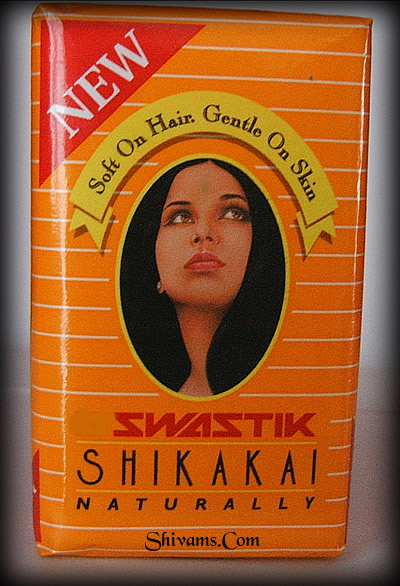
Godrej Consumer to buy Genteel and Swastik


 GCPL (Godrej Consumer Products) has decided to buy two domestic brands – Genteel (a liquid detergent) and Swastik (soaps) for an undisclosed amount.


complements

Mr Adi Godrej, Chairman, GCPL, said, “The two brands fit well into our portfolio and should improve our profitability in soaps and liquid detergents by nearly Rs 8 crore every year. Besides it should also improve our EPS and market capitalisation by nearly Rs 300 crore.”

With plans of increasing its market shares in both soaps and liquid detergents, Genteel and Swastik Shikakai would complement GCPL's Shikakai soap brand and Ezee brand of liquid detergents. 

Heritage brands

Godrej Shikakai has a 50 per cent share in the category while Swastik Shikakai would add to the market share with its 20 per cent.

Ezee also dominates the category with a75 per cent share and Genteel would add its additional 12 per cent in the same category.

 Mr A. Mahendran, MD, GCPL said, “The acquisition extends our leadership in the speciality liquid detergents category and consolidates our number two position in the personal wash category in India. Genteel and Swastik are household brands in India with a legacy of over fifty years of serving Indian consumers. We look forward to capitalising on the synergies available by adding these heritage brands to our portfolio and helping these brands to their next phase of growth.''

However, GCPL has decided to focus on the acquired soap brands rather than trying to revive dormant soap brands such as Evita and Ganga in its portfolio.
  

Dabur Nepal launches 1st hair oil especially for men


        Dabur Nepal launches 1st hair oil especially for men, signs Nepali Rockstar Nima Rumba as brand ambassador. 

    Dabur Nepal Pvt. Ltd — a subsidiary of Dabur India Ltd. announced the launch of a new hair oil brand, PROstyle Dandruff Control Hair Oil, the 1st ever hair oil developed especially for men.

        PROstyle is a quick-absorbing light hair oil that controls dandruff naturally without any harmful chemicals. It contains the best natural dandruff control ingredients like Lemon, peppermint and rosemary. These natural ingredients also make hair soft and smooth. PROstyle Dandruff Control Hair Oil has a refreshing macho perfume to keep you stylish, cool and confident.

        Dabur Nepal’s Head of Marketing Abhaya Pd. Gorkhalee said Dabur Nepal has developed PROstyle Dandruff Control Hair Oil exclusively for the Nepalese consumers based on local consumer insights. “PROstyle is perhaps the 1st product developed by any FMCG multinational company to cater to the needs of discerning Nepalese consumers,” he added.


Thursday, December 16, 2010

Tata Tea re-launches Premium brand in Pune


Tata Global Beverages Limited (TGBL) today announced the re-launch of its flagship Tata Tea Premium brand in Pune. According to Tata Tea, Premium is currently the largest packet tea brand in the country accounting for an all India value share of 8 per cent and it dominates several states in the North, East and Western parts of the country. Earlier, the relaunch has took place in Bhubaneswar and Lucknow.

       The brand was launched in 1985 in India with the introduction of the poly pack. In 2003 it became the country’s largest brand. Tata Tea holds brands like Premium, Gold, Agni and Life under its Umbrella.

  Speaking on the occasion of the re-launch of Tata Tea Premium, Sushant Dash, vice president, marketing, TGBL said, "The intent of this re-launch is to take this brand further in this journey. What differentiates Tata Tea Premium from the others in the market is a unique blend which gives a cup of tea other brands find very difficult to match. Tata tea Premium commands a value share of 5.6 per cent in Maharashtra, which is a highly fragmented market with a large number of local players operating. 

    Maharashtra is one of the biggest tea markets in the country and the Tata Tea brand has a very good equity in this market hence Maharashtra is one of the focus states for Tata Global Beverages."

Tata Tea Premium sells two variants in the state. Tata Tea Premium Dust (red pack) has a strong presence in the southern and Marathwada regions of Maharashtra. The Leaf variant (green pack) sells in Mumbai, Pune and certain other parts of Maharashtra.


  He added that the last two years have been difficult for the tea category with tea prices in the auctions going up rapidly. This combined with inflation on sugar and milk has actually resulted in a drop in consumption per household for the category as a whole